Our Process
A Dialogue of Four Hands
From raw clay to finished form — a journey through fire.
Every piece that leaves our Athens studio is the result of a shared vision between two artists, Maria and Anna. From the initial concept and design to the final stroke of glaze, we work together at every stage. It is a process of four hands, two perspectives, and two meticulous checks, ensuring that what reaches you is not just a ceramic object, but a piece of our collective devotion.
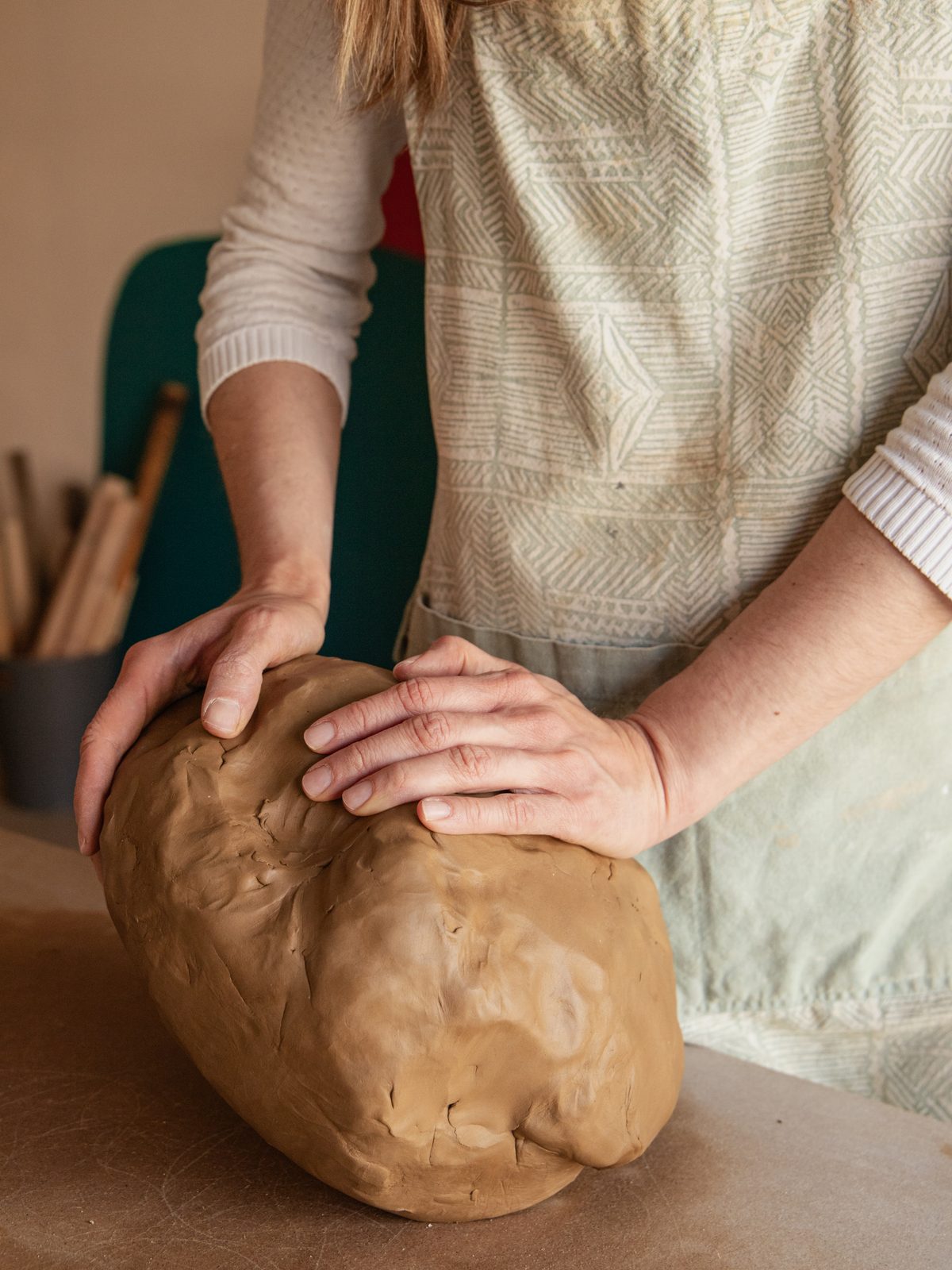
Wedging and preparing the clay
We begin with raw clay, wedging it by hand to expel air and align its structure. This is physical, meditative work — a moment where the clay is primed to collaborate.
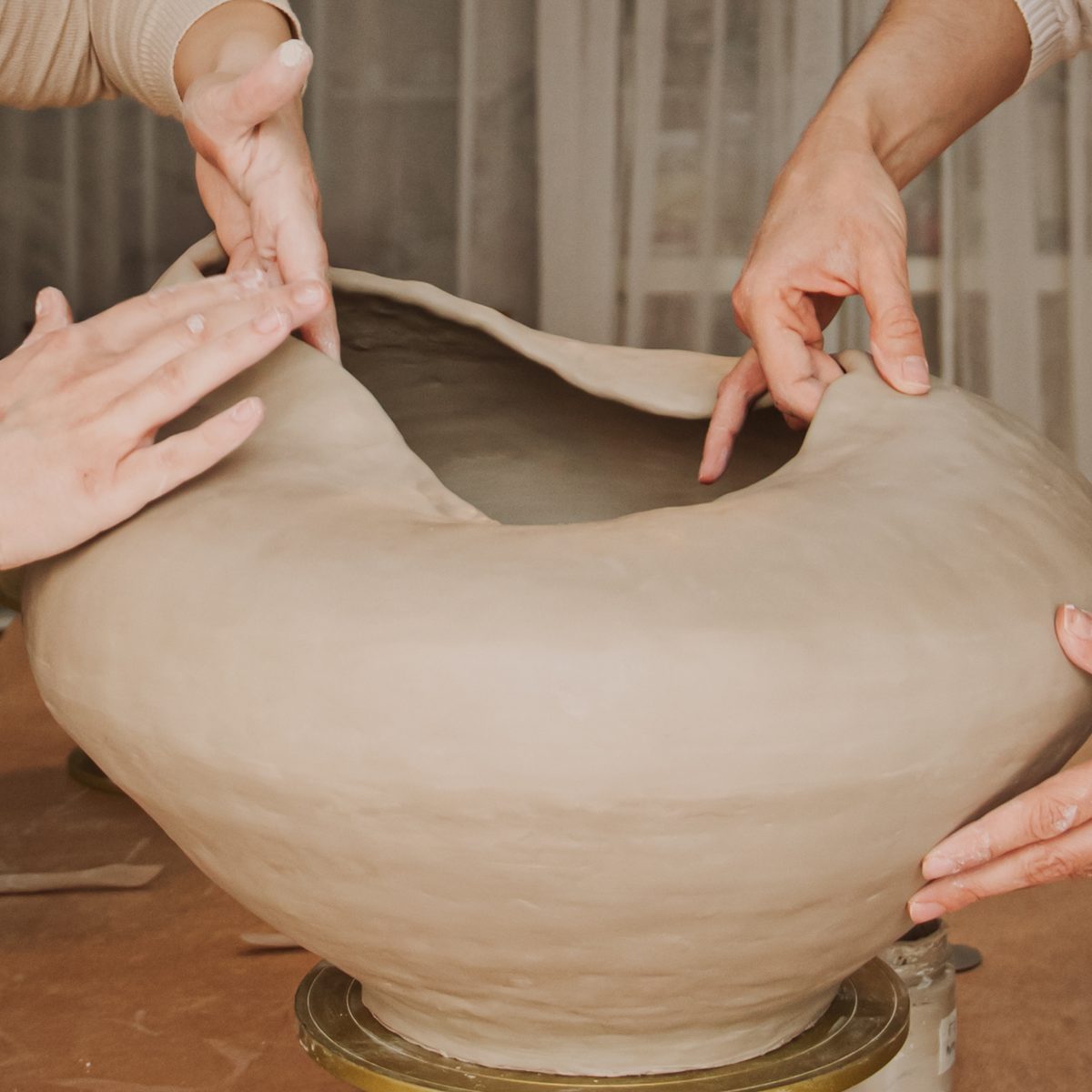
Shaping by instinct
Every curve and every texture is sculpted by hand. Each piece is a live conversation between the two of us and the material. With four hands involved in the making, every decision — from wall thickness to the final lip — is intentional and twice-refined.
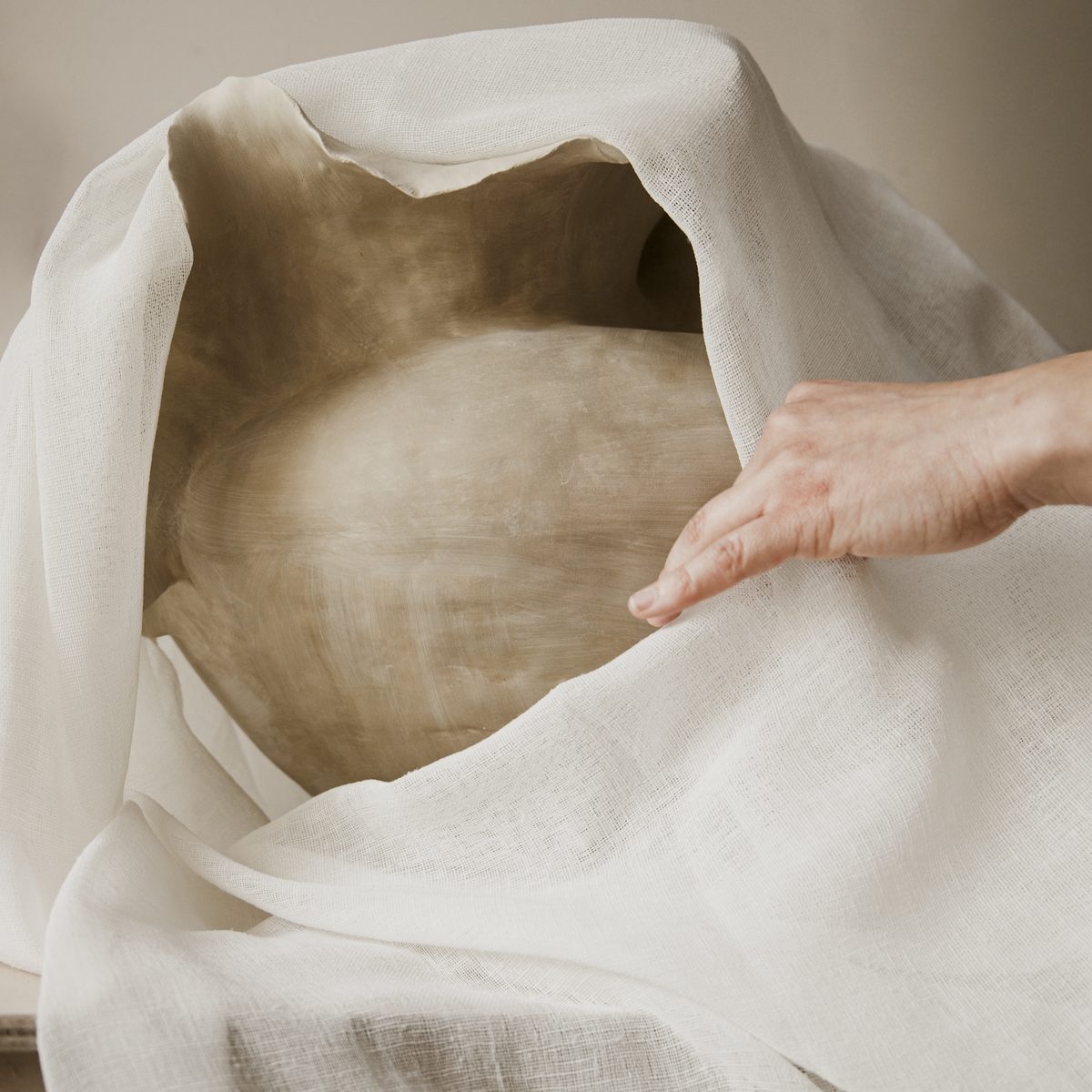
Controlled drying to ensure integrity
Freshly formed pieces dry slowly over several days. We monitor them constantly, covering and uncovering in stages. In ceramics, patience is not optional; it is a material requirement to prevent cracking.
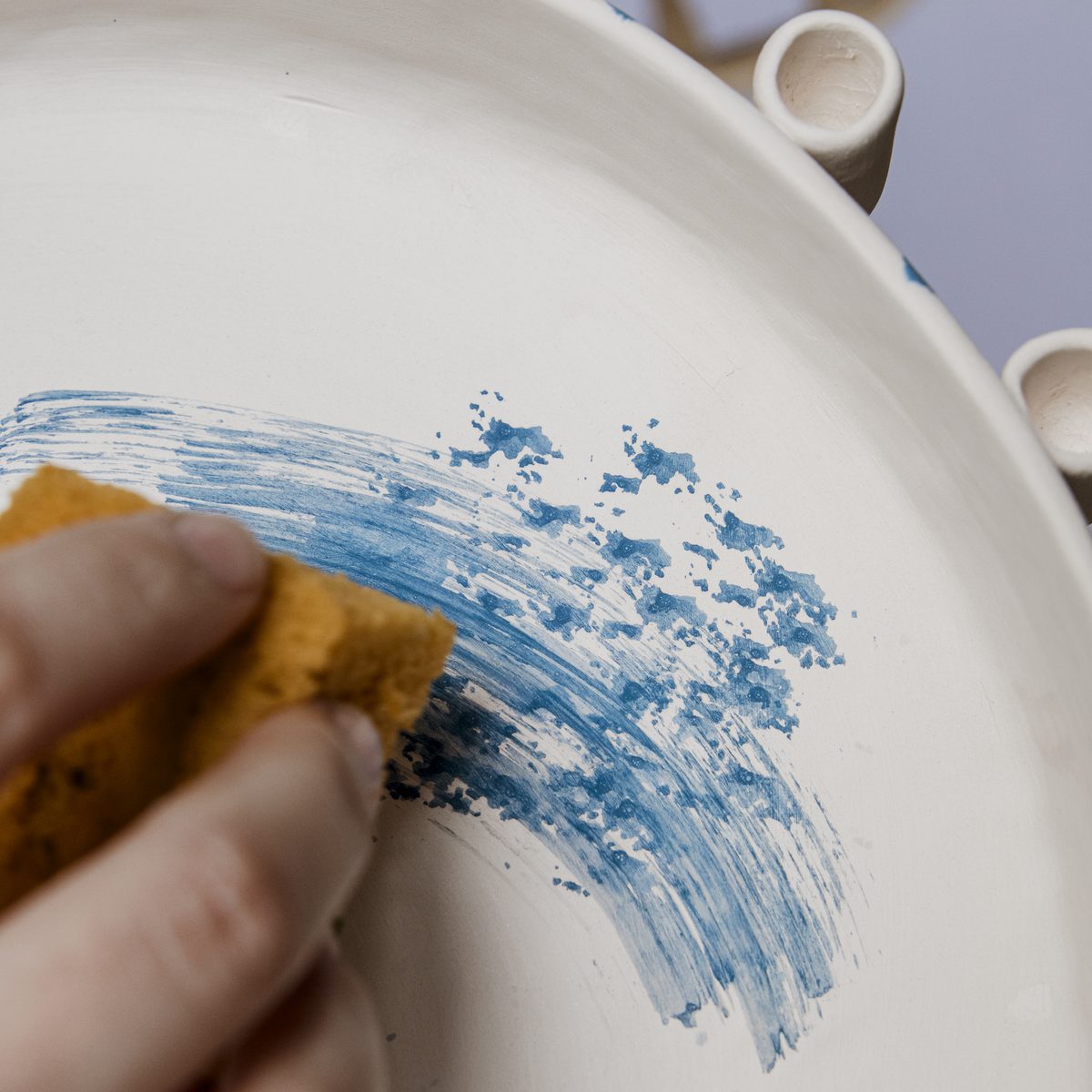
Hand-applied engobes and pigments
We mix our own engobes from metal oxides, using recipes developed through hundreds of test tiles. Application is strictly by hand — dipping, pouring, or brushing. The overlapping lines where pigments meet become a unique part of each piece’s signature.
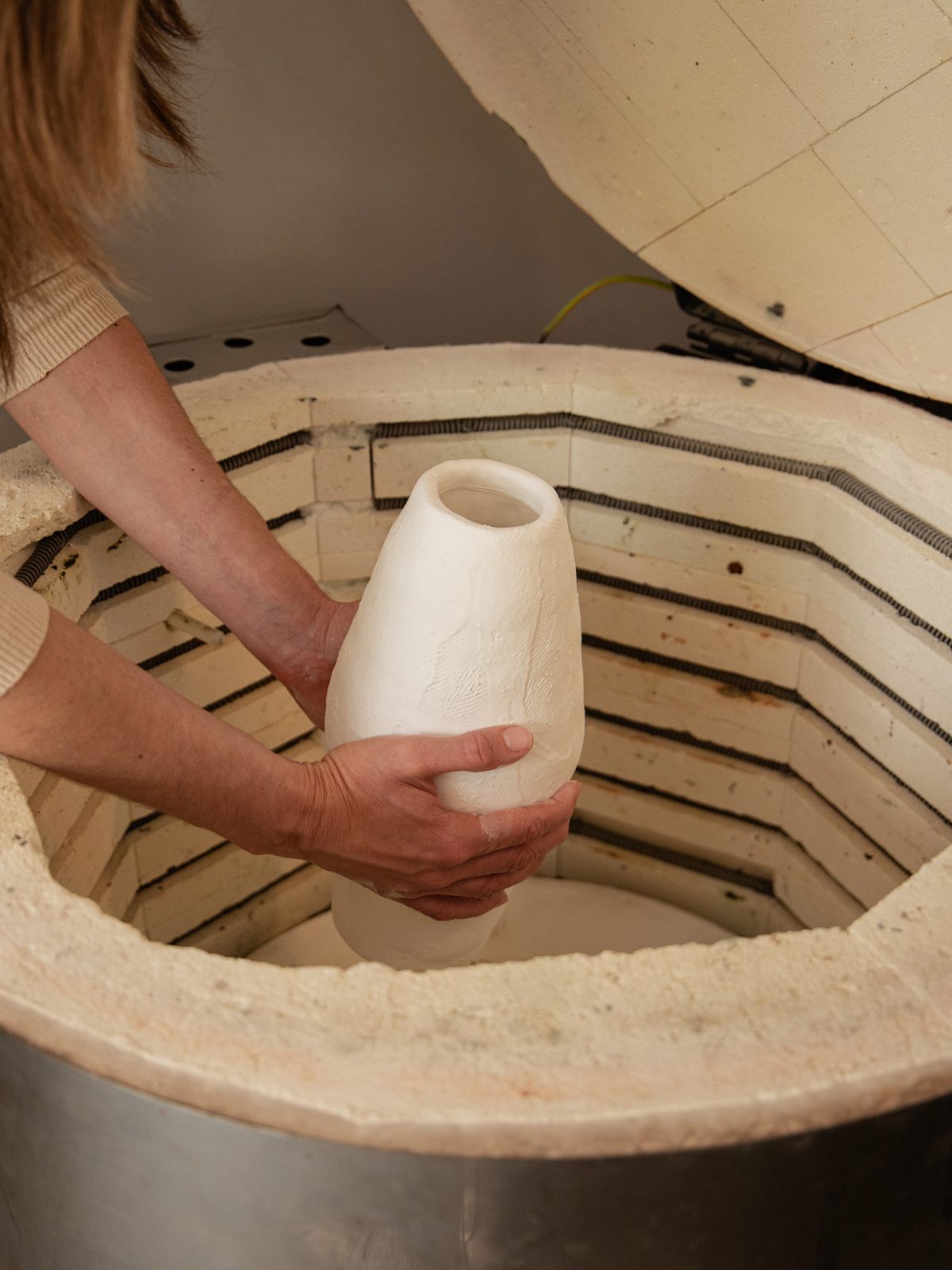
Firing at 980–1000°C
The kiln transforms fragile, dried earth into porous ceramic. This fire burns away organic matter and chemically alters the clay body. What enters as earth emerges as stone.
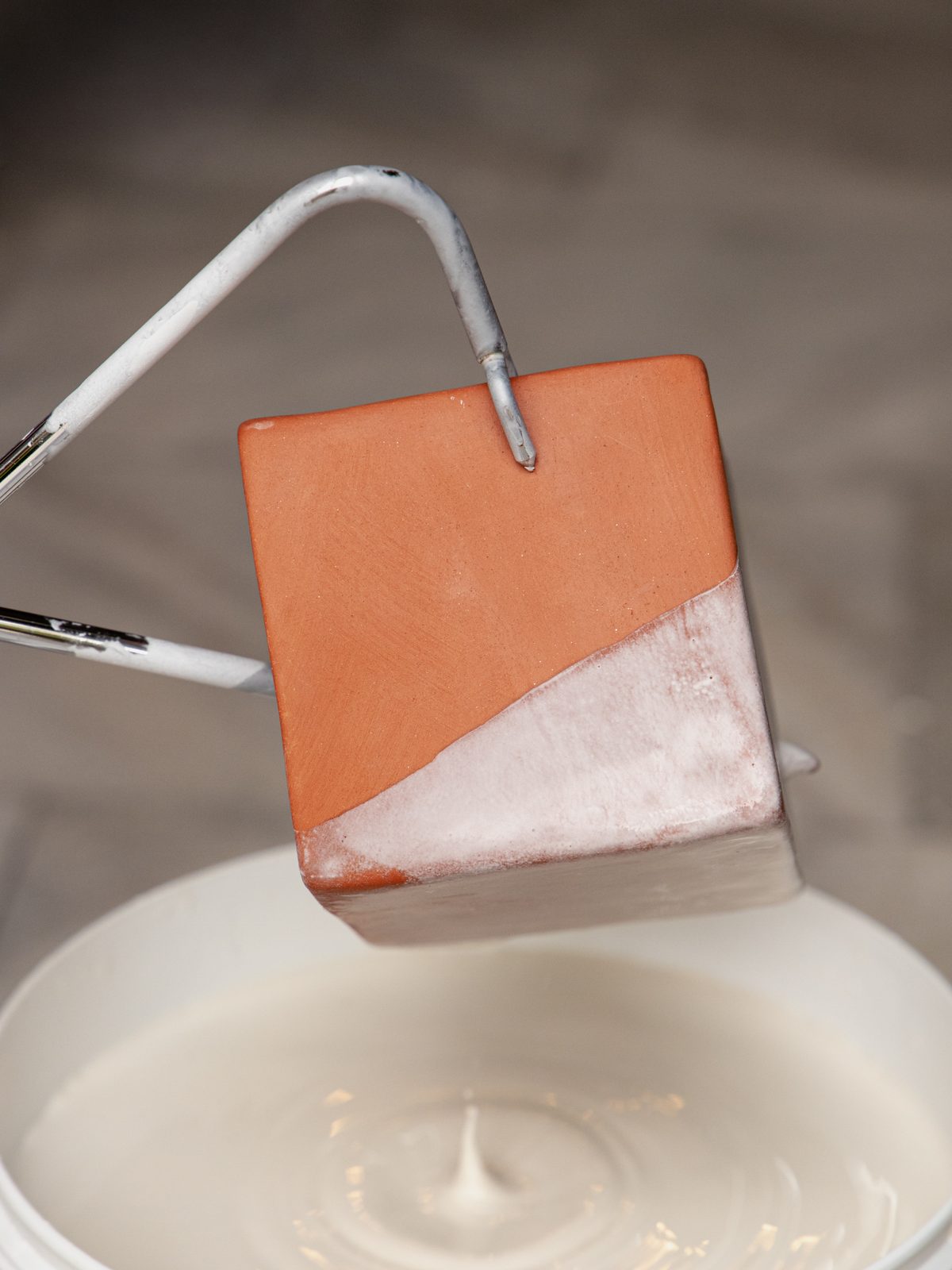
The alchemy of finish
Glazing is where chemistry meets intuition. We use three primary techniques — dipping, pouring, and brushing — to create surfaces that invite touch. Each piece is inspected by both of us before the final fire, ensuring the finish aligns with our original intent.
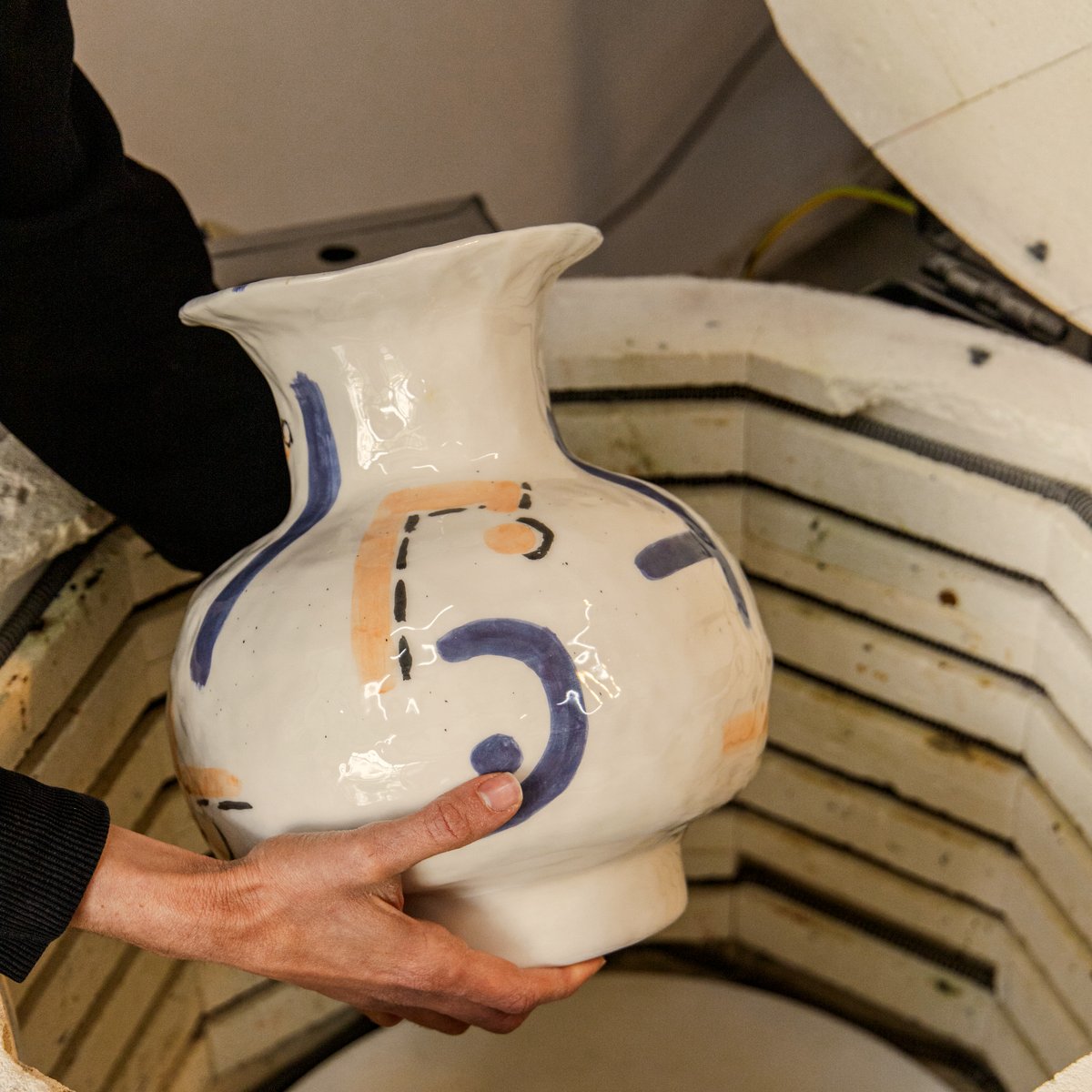
Second firing at 1000–1280°C
This is the final metamorphosis. At high temperatures, raw minerals melt into glass, fusing permanently with the clay. This process vitrifies the piece, making it durable, waterproof, and timeless.
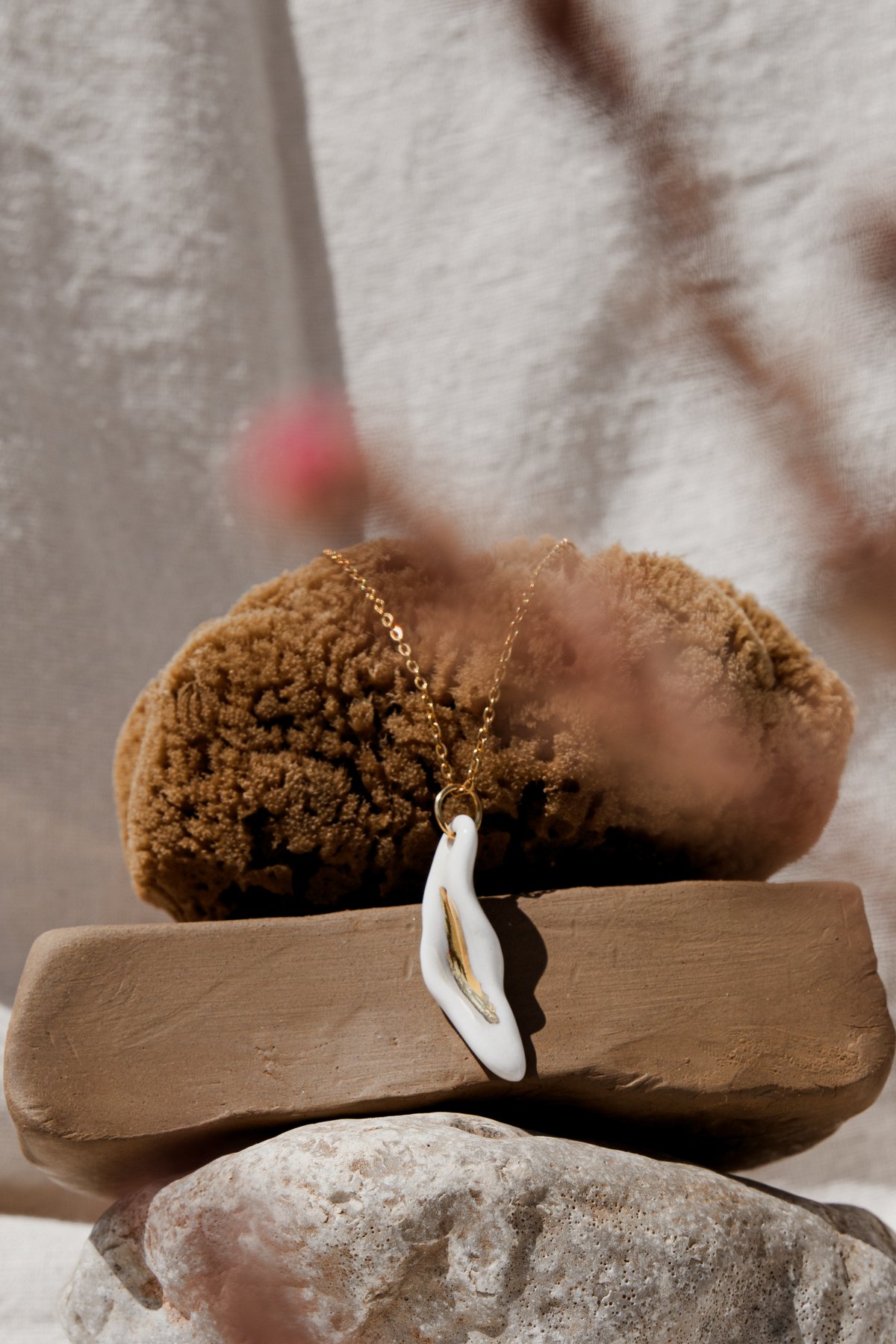
Luster work and gold accents
For our most intricate pieces, a third firing at lower temperatures is required for 24K gold accents or delicate luster glazes. This adds the final layer of intention to the narrative.
“Every piece carries the memory of fire.”View Selected Works